A Century of Ceilings in a Few Square Miles
Central Omaha is where the city's whole construction history lives side by side. Benson was its own municipality until Omaha annexed it in 1917, and its walkable blocks off Maple Street still carry the bungalows and foursquares of that streetcar era. Dundee, a couple of miles south, is the same vintage with its own historic pedigree. Push west past 60th and 72nd Streets and the housing jumps forward in time — Westgate's 1950s ranches, the postwar capes and split-levels around the old Aksarben grounds, the mid-century spread of the District 66 neighborhoods — before the 1960s and '70s tract patterns take over entirely toward the I-680 loop.
That range is exactly why ceiling work in this part of town rewards a professional eye. A 1920s Benson bungalow, a 1954 Westgate ranch, and a 1971 remodel-era rec room are three different ceiling systems needing three different plans — and central Omaha homes frequently contain more than one of them under a single roof.
First Question: Which Ceiling Do You Actually Have?
Lath-and-plaster originals
Benson and Dundee's pre-war homes were plastered, not drywalled — and plaster is usually smooth, not popcorn. If your old house has textured ceilings anyway, that texture almost certainly arrived during a later remodel, which matters for both technique and testing.
Popcorn sprayed over plaster
A very central-Omaha situation: mid-century owners "modernized" cracked plaster by spraying acoustic texture straight over it. Removing that layer without wrecking the plaster beneath takes a gentler touch than scraping drywall — and the texture itself dates from the asbestos-caution decades.
Postwar drywall with original texture
From Westgate west, 1950s–70s ranches got drywall ceilings finished in sprayed popcorn or stomped patterns from day one. These are the classic removal candidates: test, scrape, skim, refinish.
Basement and attic conversions
Half-story attic bedrooms and finished basements in this part of town were often completed decades after the original build — each with the ceiling fashion of its own moment. Every distinct era gets its own lab sample.
Testing Matters Most in the Remodel Belt
Here's the counterintuitive part: central Omaha's oldest houses often carry the highest testing priority. Original 1920s plaster predates the sprayed-texture era — but the remodels that added texture to those plaster ceilings happened squarely inside the decades when asbestos was a common ingredient. Meanwhile the postwar ranches' original texture sits in the same window. Either way, the $50–$100 lab test comes first, and results steer the plan: routine removal on a negative, encapsulation or licensed abatement on a positive. No one who works on older housing for a living skips this step, and no one quoting your project should either.
Why Central Omaha Rewards Doing It Right
These neighborhoods hold their value on craftsmanship — it's why Benson's bungalow blocks and the District 66 ranches keep attracting buyers who could afford newer square footage farther west. Ceiling work either honors that or undermines it. A hurried skim over failing plaster telegraphs through paint within a year; a texture patch that ignores the original pattern announces itself from the doorway forever. Conversely, a properly restored ceiling is invisible in the best sense: the room simply reads as it should have all along, and appraisers and buyers respond to that coherence even when they can't name it. In housing stock this old, the cheap version of ceiling work is reliably the expensive version on a long enough timeline.
The Services Central Omaha Homes Use Most
Alongside straight popcorn removal, the referral pro's central-Omaha work leans heavily on the adjacent skills these houses demand: ceiling repair for cracked and bellied plaster, water stains under century-old rooflines, and sagging additions; texture matching where past patches never blended into the original stomp or swirl patterns; and ceiling painting with stain-blocking primers that finally defeat the smoke and water history a 90-year-old ceiling accumulates. It's common for a Benson project to be one part removal, one part plaster rescue, and one part paint — quoted as a single coherent job.
Updating Without Erasing the Character
Nobody buys a Benson bungalow or a Dundee foursquare because they want it to feel like a suburban new build — the character is the point. Ceiling work in these neighborhoods aims for sympathetic, not sterile: smooth flat finishes that read as original plaster, coved transitions preserved, picture rails and crown left undisturbed, and 1960s texture removed precisely because it was never part of the house's story. In the postwar belt the calculus flips — there, a clean knockdown or smooth conversion is the update that helps a 1955 ranch compete with renovated listings nearby. Either way the free quote walks your actual rooms and prices the version that fits the house. Planning numbers live in the cost guide.
How a Core-Neighborhood Project Runs
Walkthrough with era eyes
The first visit identifies what each ceiling actually is — plaster, drywall, or texture-over-plaster — room by room, because central Omaha houses routinely mix all three.
Sample every distinct era
Original surfaces, remodel-era texture, and later basement or attic finishes each get their own lab sample. One clean result doesn't clear a different decade's work.
Contain around real life
Older floor plans mean smaller rooms and more doorways; containment is built room by room so the household keeps functioning around the work zone.
Remove, stabilize, refinish
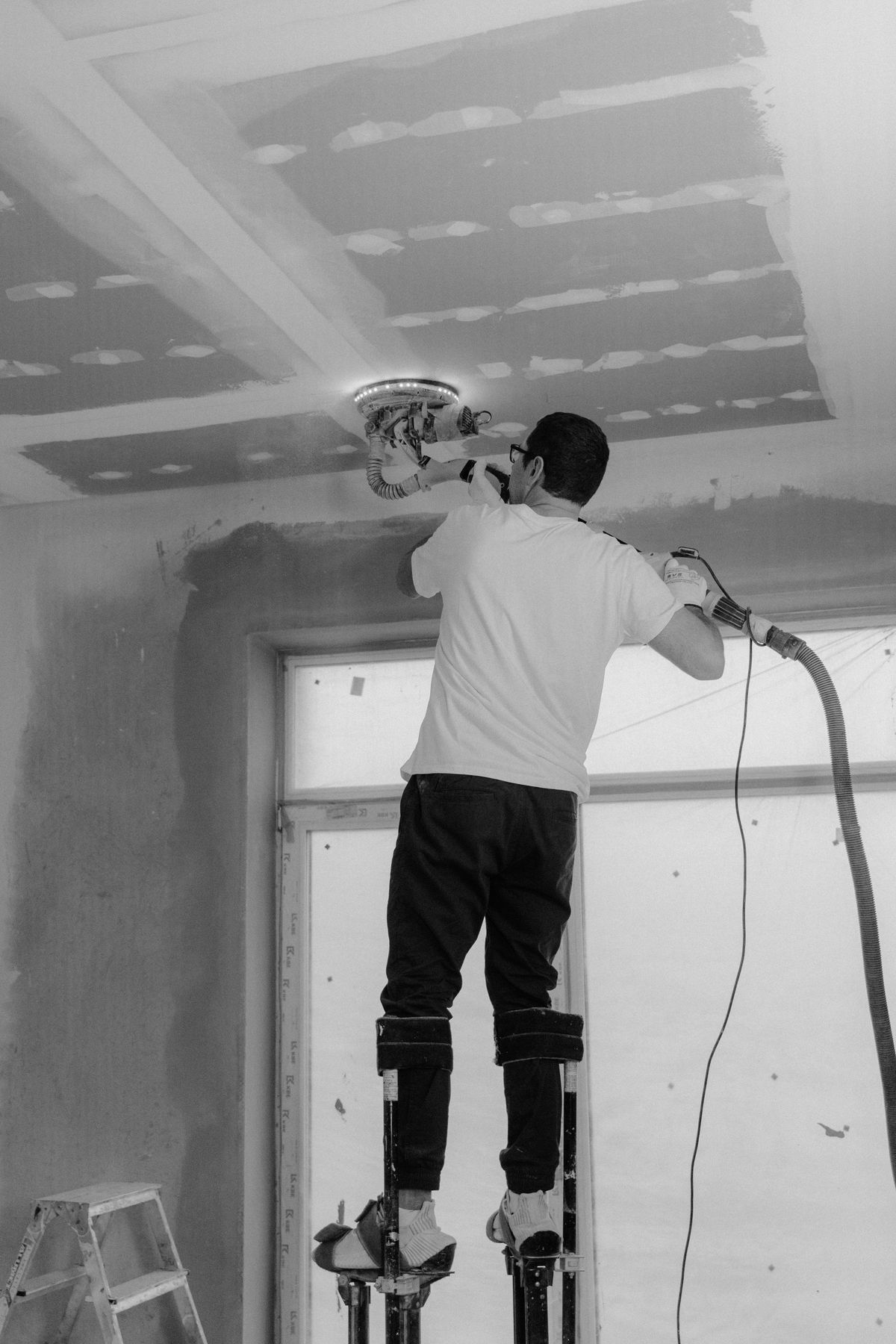
Texture comes off with substrate-appropriate pressure, failing plaster gets re-anchored where found, and the surface is skimmed to the finish the house deserves.
Prime and paint to close
Stain-blocker over the decades of history, flat ceiling paint corner to corner, hardware rehung, plastic gone.
Neighborhoods We Cover in the Core
Benson and its surrounding blocks off Maple Street and the Northwest Radial; Dundee, Memorial Park, and the Happy Hollow corridor; the District 66 neighborhoods, Westgate, Rockbrook, and Aksarben near UNO; plus Country Club, Minne Lusa, Florence, and the midtown blocks running toward downtown and the Old Market. If your house is inside the I-680 loop and east of 120th, this is the page for you — and if you're not sure which page fits, it genuinely doesn't matter, because the same local professional answers either way.
Benson & Central Omaha Questions
Can popcorn be removed from plaster without destroying it?
Usually, yes — with adjusted technique. The texture is wetted and lifted with lighter pressure, then the plaster face is skimmed to restore a paintable surface. Where the plaster underneath has failed (loose keys, live cracks, bellies), that gets stabilized as part of the same project rather than papered over.
Our 1926 house has smooth ceilings. Is there anything to test?
If they're original smooth plaster and you're not disturbing them, generally no popcorn-related concern exists. Testing becomes relevant when texture, patch history, or old insulation will be disturbed — and older homes hold other legacy materials (pipe wrap, vermiculite) worth respecting during any ceiling-opening work.
Why does my ceiling have a faint swirl pattern under the paint?
That's likely an original stomped or swirled finish — a hand-applied pattern common in Omaha housing across several decades. It can be preserved and matched after repairs, or skimmed flat if you'd rather go smooth; both are ordinary requests here.
We're mid-renovation and just found texture under a dropped ceiling. Now what?
Classic central-Omaha discovery — suspended grid ceilings from the '60s and '70s frequently hide an older textured or plaster ceiling above. Stop before disturbing it, leave the tiles you've removed where they are, and get the hidden surface sampled. If it tests clean, you've gained ceiling height and a straightforward refinish; if not, you've avoided contaminating an active renovation, which is the expensive version of this story.
Do older central Omaha projects cost more than suburban ones?
Sometimes modestly, because plaster-aware work and irregular room shapes add hours — but smaller room sizes in older homes often offset it. The honest answer arrives the same way it does everywhere: a free written quote for your specific ceilings, with the plaster or drywall reality priced in from the start.
Old House, New Ceilings, Same Character
Free quotes from a licensed, insured pro who knows the difference between a 1920s plaster ceiling and a 1970s remodel — and treats each one accordingly.